
The Science Museum - enriching Computing
- primarytechreview

- May 23, 2024
- 2 min read
Updated: Aug 28
Educational visits have the potential to enthuse children about Computing and provide them with context how computers affect society. Although there is not a dedicated Computing museum in London, a well-planned visit to the Science Museum has huge potential for enriching work done in Computing lessons or providing inspiration for further study.
The Science Museum is a huge building and at times can be busy. For a Computing visit to be most beneficial, teachers will need clear learning goals, with children prepared well before the visit and given the opportunity for follow up work.
A good focus for a visit to the Science Museum would be around how computers have benefitted society. Focusing on this, rather than the technology itself, will be far more accessible for many children. Teachers could prepare questions for children to answer around some of the fields on display in the Science Museum that have been affected by the development of Computers.
These include:
Space Exploration (ground floor gallery)
Engineering careers (first floor gallery)
Telecommunications (second floor gallery)
Developments in flight (third floor gallery)
The first floor gallery, 'Engineers' and 'Technicians' give examples of careers that use computers and science. Children can try out fields including robotics engineering, greenscreen technology and lighting engineering. They can using technology to separate blood within a centrifuge and try out work from other careers that are linked to computers and technology. This gallery can be busy, but visiting in the morning usually provides more time for children to try out the activities.


Throughout the museum, children will discover examples of devices that are controlled by computers, or that use computers to function. The space gallery is filled with examples of rockets that would have been controlled by computer programs, including a simulation of a lander.
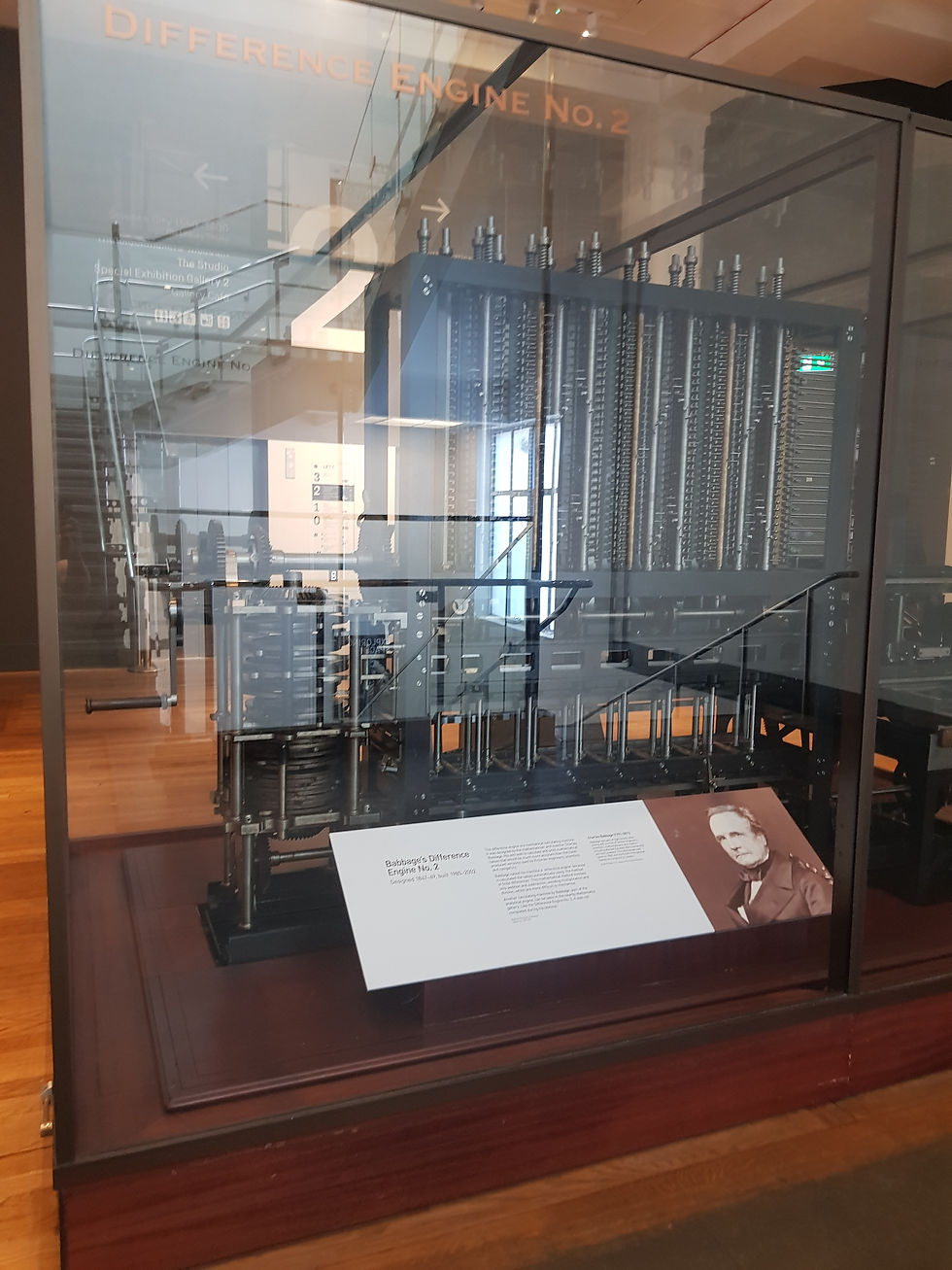
On the second floor, children can view a replica of the 'Difference Engine Number 2', which was designed by Charles Babbage and which Ada Lovelace realised the potential for calculation.
Towards the back of the museum, in the basement, there is a paid exhibition called 'Power Up', in which children can explore and play computer games from the 1980's, until the present. My daughter came away from this visit full of ideas for her own computer games! The gallery is noisy and busy, especially in the afternoons and does feature some games that children might be asked to avoid, depending on their age.
The Science Museum is full of opportunities to learn about how computers have enabled advance in fields from engineering, to medicine, to entertainment. A well-planned trip would enable children to discover some of these and would undoubtedly inspire their imaginations.

Focusing on the work that computers enabled, rather than the technical specifications of the computers themselves makes the visit more accessible to children.


Comments